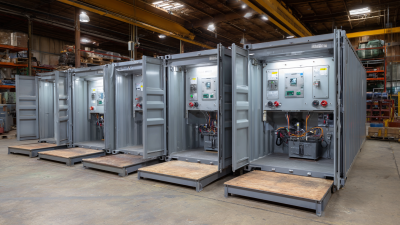
Okay, so when it comes to picking an industrial dust extractor, you'd think you just compare motor power and the airflow they advertise. But honestly, that's not the whole story. Your actual workshop conditions—dust type, duct length, filters, all that—can completely change the game. So yeah, specs are nice, but they're just a starting point.
Alright, so we're diving into the top 10 industrial dust extractors for 2026 – yeah, I know, it's a bit early, but you gotta plan ahead, right? Anyway, we're looking at each one based on suction power, how well they filter, capacity, noise levels, how easy they are to move around, and maintenance. Because when you've got saws, grinders, CNC machines, or a whole production line running, these things really matter. You might think a powerful unit is all you need, but if the filters get clogged or the hoses are too narrow, it's useless. Honestly, it's the little stuff that makes or breaks it – like the hose design, for instance. That can be a game changer.
So here's the thing—when we're picking these, it's a mix of what you actually need in the workshop and what the manufacturer says you should have. We really look at how each one handles the day-to-day: repeated use, fine dust, heavier debris, workloads that change all the time. And we also check the little stuff—like how accessible the filter is, how easy it is to empty the container, whether replacement parts are easy to get, and if it's comfortable for the operator. Oh, and one thing a lot of people miss: if your collection bin fills up, your airflow drops fast. That's a sneaky one.
Look, real-world results aren't gonna match the brochure numbers, right? Things like room layout, humidity, duct length, even how clean the filter is—they all mess with how well it actually extracts. And you know those published specs? They're usually tested in perfect lab conditions, so comparing them side-by-side isn't always fair or useful. I'm not here to tell you one machine is the magic bullet for every facility—that'd just be ridiculous. Instead, I want to break down where each extractor really shines, and also be honest about its weak spots in practice. Before you hit that buy button, it's worth double-checking that your tools and workplace can handle it. Seriously, taking a moment to pick the right thing can save your gear, keep things cleaner, and make production run smoother. And hey, even the pros slip up sometimes – you could overlook a gotcha. So it's a good idea to give the specs another look.
An industrial dust extractor is more than a powerful vacuum with a large container. It must capture dust close to the cutting, sanding, or mixing point. Strong airflow matters, but stable suction under load matters more. A useful unit should handle fine particles, heavy chips, and long operating cycles without overheating. In a busy workshop, workers notice this difference when dust no longer settles on machine guards by lunchtime.
Filtration now defines performance. A modern extractor should use staged filtration, sealed joints, and automatic filter cleaning that limits airflow loss. High-efficiency filters are important for fine dust, but their rating must match the material and workplace assessment. A pressure gauge gives operators visible evidence of filter loading. It is a small detail, yet many machines lack clear readings. That makes maintenance guesswork.
Safety and serviceability also separate industrial equipment from ordinary cleaners. Look for conductive hoses, reliable grounding, strong casters, emergency controls, and containers that can be emptied without releasing dust. Sensors may monitor airflow, temperature, and filter pressure, while digital records can support inspections. However, connected features are not automatically useful. A simple alarm that workers understand may outperform a complicated dashboard. I would also inspect replacement-filter access before buying. Engineers often discuss peak power, but technicians remember awkward maintenance. That practical gap still deserves attention.
10 Best Industrial Dust Extractors for 2026?
Comparing industrial dust extraction systems requires more than reading airflow figures. Airflow should be measured at the tool, not only at the motor outlet. Static pressure shows how well the extractor handles long hoses, narrow ducts, and loaded filters. Numbers can mislead. A powerful motor may perform poorly through restrictive pipework. In workshops, I would test suction with the actual hose, tool, and filter installed.
Filtration efficiency is equally important. A reliable system should capture fine particles without quickly losing airflow. Look for a high-efficiency filter, effective sealing, and automatic or manual filter cleaning. Check the dust container capacity too. A container that fills during a morning shift creates unnecessary interruptions. Noise matters near operators, especially in enclosed production areas. Lower sound levels can improve communication and reduce fatigue.
Energy use deserves careful comparison. Variable-speed control may reduce consumption when full suction is unnecessary. Safety features should match the dust type, operating temperature, and workplace assessment. Conductive hoses, grounded components, and overload protection can reduce practical risks. Maintenance access also affects long-term performance. If filters are difficult to inspect, replacement may be delayed. That is a common weakness. Buyers should record airflow, pressure, noise, and filter condition during real production, then compare results rather than relying on catalogue claims.
Industrial dust extractors differ by dust load, particle size, airflow demand, and work environment. Choosing by motor power alone can create expensive mistakes. Dust changes everything.
Portable cartridge extractors suit maintenance teams, workshops, and short production runs. Their pleated filters capture fine particles while keeping the unit compact. They work well beside cutting, sanding, and grinding stations. A mobile unit with automatic filter cleaning can reduce interruptions. However, undersized containers fill quickly in busy facilities.
Central baghouse systems fit continuous manufacturing lines with several collection points. They handle heavy dust volumes and support longer operating periods. Cyclone pre-separators are useful for coarse chips, shavings, and abrasive debris. They protect finer filters from early loading. Fit matters. A cyclone alone usually cannot capture the smallest airborne particles.
Wet dust collectors suit sticky, damp, or potentially heat-sensitive dust. They use liquid to capture particles, but operators must manage wastewater and corrosion. High-efficiency particulate filters are valuable for fine, dry dust near sensitive processes. They require careful sealing and scheduled replacement. Experience shows that poor duct layout can defeat excellent filtration. I have seen systems lose suction because bends were too tight. Pneumatic extractors can serve compact stations where electrical equipment is impractical, though compressed-air consumption may be higher than expected. Before selection, measure airflow at the tool, inspect filter access, and confirm the collector matches the material safety data and local requirements.
Industrial Dust Extractor Types and Their Ideal Applications
The chart compares typical airflow capacity ranges for common industrial dust-extraction systems. Actual performance depends on duct length, filter loading, static pressure, dust properties, and system configuration.
Industrial dust extractors now serve as production equipment, not optional housekeeping tools. OSHA’s respirable crystalline silica standard limits exposure to 50 micrograms per cubic meter over an eight-hour shift. This figure changes how engineers assess airflow, filtration, and maintenance. A machine may look powerful, yet poor hood placement can leave dust around a cutting table.
OSHA’s respirable crystalline silica standard limits exposure to 50 micrograms per cubic meter over an eight-hour shift.
Leading 2026 systems should match the dust type, particle size, and work cycle. NIOSH recommends controlling exposure at the source, with local exhaust ventilation preferred over general room ventilation. Look for verified airflow performance, sealed filter chambers, automatic filter cleaning, and clear differential-pressure readings. HEPA filtration can support fine-particle control, but it cannot repair leaks. Small details matter.
The U.S. EPA’s AP-42 emissions guidance shows that dust generation varies widely by material and process. Wood, mineral, and metal dust therefore require different collection strategies.
In field inspections, I would check duct velocity, grounding, filter loading, and discharge handling before trusting a product label.
Noise also deserves attention near operators. A quieter extractor may improve daily compliance, even if its peak airflow is slightly lower. No specification sheet tells the whole story. Real workshops are messier, and maintenance records are often incomplete.
The best industrial dust extractor for 2026 should control exposure, not simply collect visible debris. OSHA’s respirable silica standard sets an eight-hour exposure limit of 50 micrograms per cubic meter, with an action level of 25 micrograms. These figures make airflow, source capture, and filter performance essential evaluation points. A machine suitable for wood dust may fail with silica, composite materials, or combustible metal particles.
Filtration claims need careful verification. The U.S. Department of Energy defines HEPA performance around 99.97% efficiency at 0.3 microns, while EN 1822 uses the most penetrating particle size. These are not interchangeable claims. Check the test method, filter class, sealing design, and pressure readings. Automatic filter cleaning helps maintain airflow, but it can also release short dust pulses. That detail is easy to overlook.
Safety features deserve equal attention. NFPA 660 addresses combustible dust hazards, including ignition control, explosion protection, and housekeeping practices. Conductive hoses, grounding, antistatic construction, and certified isolation equipment may be necessary for specific processes. Local requirements still matter. They are not optional paperwork. During a site trial, measure airflow at the tool, pressure across the filter, and dust leakage around seals. I would not trust a clean-looking extractor without those measurements. A practical weakness remains: operators often remove filters for convenience, quietly defeating the entire control system. Sources: OSHA Respirable Crystalline Silica Standard; U.S. DOE HEPA Filtration Standard; NFPA 660.
| Rank | Extractor Type | Recommended Application | Typical Airflow | Static Pressure | Filtration Configuration | Dust-Class Target | Filter Cleaning | Collection Capacity | Key Safety and Compliance Checks |
|---|---|---|---|---|---|---|---|---|---|
| 1 | Heavy-Duty M-Class Mobile Extractor | Concrete, masonry, wood, and general industrial dust | 250–450 m³/h (147–265 CFM) |
220–300 mbar | Pleated primary filter with disposable fleece or plastic liner | M | Automatic or semi-automatic pulse cleaning | 30–50 L | Verify EN 60335-2-69 classification, residual dust limits, grounded hose, sealed waste disposal, and alarm for reduced airflow. |
| 2 | H-Class HEPA Extractor | Fine hazardous dust, lead-containing dust, and controlled remediation work | 250–500 m³/h (147–294 CFM) |
220–320 mbar | High-efficiency main filter plus individually tested HEPA H13 or H14 exhaust filter | H | Automatic cleaning with filter-monitoring indicator | 25–50 L, sealed bag system | Check whole-machine leakage testing, HEPA integrity certification, safe bag removal, warning indicators, and local hazardous-dust regulations. |
| 3 | Continuous-Duty Industrial Extractor | Production lines, fixed tools, and extended multi-shift operation | 500–1,200 m³/h (294–706 CFM) |
250–500 mbar | Large-area cartridge or bag filters with optional secondary HEPA stage | L / M | Timed automatic pulse cleaning during operation | 50–100 L | Assess motor duty rating, thermal protection, continuous grounding, noise exposure, airflow balance, and maintenance access. |
| 4 | Automatic-Filter-Cleaning Concrete Extractor | Diamond grinding, floor preparation, cutting, and drilling | 350–700 m³/h (206–412 CFM) |
250–350 mbar | Two-stage pleated filtration with high-surface-area cartridge | M | Automatic pulse or alternating filter cleaning | 30–65 L | Look for airflow-loss monitoring, antistatic construction, compatible dust shrouds, sealed collection bags, and silica-dust control suitability. |
| 5 | Wet-and-Dry Industrial Vacuum Extractor | Workshops, maintenance areas, liquid spills, and mixed debris | 250–600 m³/h (147–353 CFM) |
180–300 mbar | Washable wet filter plus replaceable dry pleated filter | L | Manual or semi-automatic cleaning | 40–80 L | Confirm liquid shut-off, electrical ingress protection, separate wet/dry operating modes, grounding, and compatibility with fine-dust collection. |
| 6 | Explosion-Risk Dust Extractor | Combustible metal, plastic, pharmaceutical, or food-processing dust | 300–1,000 m³/h (177–589 CFM) |
200–450 mbar | Antistatic or conductive filter media with spark-resistant internal design | Specialist | Grounded pulse cleaning or manual cleaning approved for the hazard | 30–100 L conductive container | Require a documented ATEX or equivalent hazardous-area assessment, bonding and grounding, appropriate motor protection, and correctly rated accessories. |
| 7 | Centralized Multi-Operator Dust Collector | Factories with several simultaneous extraction points | 1,500–5,000 m³/h (883–2,943 CFM) |
300–800 mbar | Large cartridge, baghouse, or compact filter-bank system | L / M / H | Programmable pulse-jet cleaning with differential-pressure control | 100–500 L or continuous discharge | Check system design airflow, duct velocity, fan isolation, pressure relief, fire protection, noise controls, and engineering documentation. |
| 8 | Fine-Dust HEPA Extractor for Clean Areas | Electronics, laboratories, precision assembly, and clean production zones | 150–350 m³/h (88–206 CFM) |
150–250 mbar | Pre-filter, fine filter, and sealed HEPA H13 or H14 final filter | H / Clean-area | Low-disturbance automatic cleaning or replace-on-indicator design | 15–40 L sealed container | Verify HEPA test documentation, leak-tight housing, low particle shedding, cleanable surfaces, noise level, and filter-change procedure. |
| 9 | High-Vacuum Source-Extraction Unit | Welding fume arms, pneumatic tools, small-bore extraction, and close-capture tasks | 100–300 m³/h (59–177 CFM) |
400–700 mbar | Compact pre-separator, fine filter, and optional HEPA or activated-carbon stage | L / M | Manual shaker, reverse-air, or automatic pulse cleaning | 20–50 L | Match airflow and vacuum to the tool, verify fume-filter suitability, monitor filter loading, and use antistatic hoses where required. |
| 10 | Pre-Separator and Main Extractor System | High-volume chips, coarse debris, abrasive dust, and applications requiring longer filter life | 400–1,000 m³/h (235–589 CFM) |
200–450 mbar | Cyclone or drop-box pre-separator followed by cartridge or HEPA filtration | L / M | Automatic pulse cleaning on the final filter | 60–200 L combined capacity | Evaluate separator efficiency, container sealing, static discharge, overflow protection, filter-pressure monitoring, and safe waste handling. |
Evaluation Notes
Airflow and static-pressure figures are representative industrial ranges; actual performance depends on hose diameter, duct length, filter loading, accessories, and operating conditions.
Dust classes are commonly associated with the requirements defined in EN 60335-2-69. Select the class according to the hazard assessment and applicable workplace regulations.
HEPA performance, whole-machine leakage, hazardous-area suitability, and regulatory compliance should be confirmed from current third-party test documentation before purchase or deployment.
Selecting an industrial dust extractor starts with the dust, not the machine’s advertised airflow. OSHA’s Respirable Crystalline Silica standard sets an action level of 25 μg/m³ and a permissible exposure limit of 50 μg/m³ over eight hours. Therefore, confirm particle size, toxicity, moisture, and combustibility before comparing models. A woodworking collector may fail with fine mineral dust. Check airflow at the tool, static pressure, filter efficiency, collection volume, and noise level. HSE guidance HSG258 also stresses capturing dust at its source, rather than relying on general room ventilation.
Installation needs practical judgment. Keep duct runs short and smooth, with grounded conductive sections where static buildup matters. Seal joints carefully. Even a small leak can reduce capture at the hood. Place the extractor where filters can be changed without climbing over stored materials. For combustible dust, review NFPA 652 guidance and complete the required hazard assessment for your location. Do not assume a standard collector is suitable for explosive atmospheres.
Maintenance is where many systems quietly deteriorate. Record differential pressure, airflow, filter changes, and unusual motor sounds. Clean pre-separators before they become heavy and restrictive. Replace damaged filters immediately. Operators should inspect hoses every shift. That habit is simple.
A common mistake is choosing maximum capacity instead of correct duty. Larger is not always safer or cheaper. Recheck performance after installation, because real workshops rarely match the original specification. OSHA, HSE, and NIOSH publications should support the final risk assessment.
It captures dust near the cutting, sanding, or mixing point. Strong suction must remain stable under load. It should handle fine particles, chips, and long operating cycles.
Staged filtration helps capture different particle sizes. Sealed joints reduce leakage. Automatic filter cleaning can protect airflow. Filter performance must match the material and workplace assessment.
Start with the dust, not advertised airflow. Check particle size, moisture, toxicity, and combustibility. Also compare tool airflow, static pressure, filter efficiency, capacity, and noise.
Capture dust at its source. Position the hood close to the cutting or sanding point. General room ventilation cannot replace local capture. This detail is often missed.
Keep duct runs short and smooth. Seal every joint carefully. Use grounded conductive sections where static buildup matters. Leave clear access for filter changes and container emptying.
Look for conductive hoses, dependable grounding, strong casters, and emergency controls. Containers should empty without releasing collected dust. Do not assume ordinary equipment suits combustible dust.
Record airflow, filter pressure, filter changes, and unusual motor sounds. Inspect hoses every shift. Clean pre-separators before they become restrictive. Replace damaged filters immediately. That habit matters.
Sensors can monitor airflow, temperature, and filter pressure. Digital records may support inspections. However, a clear alarm can outperform a complicated dashboard. Simple beats flashy.
Many buyers choose maximum capacity instead of correct duty. A larger unit is not automatically safer or cheaper. Recheck performance after installation, because real workshops rarely match specifications.
Inspect replacement-filter access before purchasing. Difficult maintenance wastes time and encourages delays. Peak power looks impressive, but technicians remember awkward service work. That gap deserves reflection.
This guide explores what defines Industrial Dust Extractors in 2026 and how modern systems are designed to manage dust, chips, fumes, and other airborne particles in demanding work environments. It explains the key performance factors buyers should compare, including airflow, suction strength, filtration efficiency, collection capacity, noise levels, energy use, durability, and compatibility with different tools and production processes. The article also reviews major extractor types and explains which applications each design is best suited for.
It presents ten leading industrial dust extractor options for 2026 without focusing on brand names, while highlighting the features that matter most for real-world performance. Readers will learn how to evaluate safety systems, filter maintenance, monitoring functions, and compliance-related design elements. The guide concludes with practical advice on choosing the correct capacity, planning installation, positioning ductwork, reducing leakage, and maintaining filters and collection units for reliable, efficient, and long-term operation.