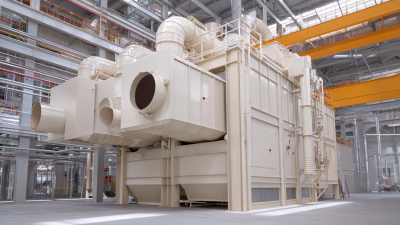
Hey, choosing the best dust collector machine in China for your factory isn’t just about comparing prices, motor sizes, or filter dimensions. You really need to dig deeper—look into actual airflow, static pressure, how well it filters, noise levels, how easy it is to maintain, and how simple it is to get replacement filters. Sometimes, a machine looks great on paper with high airflow, but once you install it with ducting resistance and filters load up, those numbers can change quite a bit.
In the U.S., OSHA has set limits for respirable crystalline silica exposure at 50 micrograms per cubic meter over an eight-hour shift. And NIOSH emphasizes that controlling airborne contaminants at their source is key—things like capturing dust right where it’s created, sealing ductwork properly, and keeping a close eye on things through continuous monitoring. Honestly, Bill Pentz, an industry pro, always says, “Capture the dust at the source.” Sounds simple, right? But in practice, it often gets overlooked.
A reliable dust collector should match what you’re actually doing in the factory, not just match your building’s size. Different tasks—like welding, cutting wood, handling cement, or working with metals—all need different kinds of filters and collection setups. So, don’t forget to ask suppliers for actual airflow test results, filter specs, pressure drop data, and maintenance records. Getting an independent review really helps build trust, and if possible, run a trial with your factory’s real dust to see how it performs.
And hey, going for the cheapest machine might seem smart at first, but it can end up costing you in clogged filters, production halts, or poor visibility for your workers. Honestly, it’s worth digging into that before making a decision. The best choice combines measuring how well it works, listening to operator feedback, checking out support from the supplier, and reviewing safety and maintenance records. When you do that, you’re more likely to pick equipment that truly delivers beyond what the sales pitch promises—whether you’re in China or anywhere else.
A dust collector machine for factory use is an engineered air-cleaning system. It captures dust near the source, transports particles through ductwork, and separates them with filters or cartridges. The cleaned air then exits through a fan and outlet. A hopper or collection bin stores the captured material for controlled handling.
For factory buyers sourcing from China, the machine should match the dust type, particle size, temperature, moisture, and production rate. Fine powder needs tighter filtration than wood chips or metal shavings. OSHA’s respirable crystalline silica standard limits worker exposure to 50 micrograms per cubic meter over eight hours. That figure shows why airflow alone is not enough. Capture position matters. So does sealing.
Airflow, filter area, pressure drop, and fan power should appear on the technical sheet. ACGIH’s Industrial Ventilation guidance emphasizes process-specific capture velocities, rather than one universal setting. NIOSH exposure-control research also supports local exhaust ventilation near emission points. Buyers should request test conditions, filter efficiency data, noise levels, and replacement-filter costs. Ask for measured results.
A common weakness remains oversizing. It increases energy use and may create unstable airflow. Undersizing is worse. Dust escapes around a worker’s breathing zone. These details are easy to miss during a showroom inspection, so a factory trial is more reliable than photographs.
A factory dust collection system captures airborne particles near the process, not after they spread everywhere. A hood or enclosure draws dusty air into connected ductwork. The fan creates negative pressure and controls airflow through the system. In a well-designed layout, each branch receives enough air without wasting excessive energy.
Inside the collector, a pre-separator may remove heavier chips and particles first. Finer dust then reaches filter cartridges or filter bags. Clean air passes through the filter media, while dust forms a surface layer. Pulse-jet cleaning releases short bursts of compressed air. The dust falls into a sealed hopper or collection container.
Real factory inspections often reveal uneven suction. One workstation may pull strongly, while another struggles. Poor duct sizing, sharp bends, leaks, and blocked filters can cause this problem. I have seen operators adjust dampers by guesswork, which sometimes makes airflow worse. Pressure gauges, airflow measurements, and routine filter checks provide better evidence.
Factory buyers should examine dust type, particle size, moisture, temperature, and hourly production volume. These details affect filter selection and fan capacity. Fine combustible dust also requires careful risk assessment and suitable protective design. A larger machine is not automatically better. Oversized equipment can increase power use and maintenance costs. The practical choice depends on measured airflow, operating hours, cleaning frequency, and the factory’s actual process.
Choosing a dust collector starts with the dust, not the machine price. Metal, wood, cement, and chemical powders behave differently inside ductwork. Particle size, moisture, temperature, and production volume all affect performance.
Cartridge collectors suit fine dust and limited floor space. Their pleated filters provide large filtration areas in compact housings. Baghouse collectors handle heavier dust loads and continuous factory operation. They often perform well in grinding, cement, and bulk material processes. Cyclone collectors remove larger particles before finer filtration. This reduces filter loading and extends service intervals. Wet scrubbers can control sticky or hot dust, but they require water management and wastewater planning.
A practical selection also considers airflow, pressure drop, filter media, discharge design, and cleaning method. Pulse-jet cleaning is common for automatic operation. Manual shaking may cost less, yet it can interrupt production. I have seen factories choose powerful fans without checking duct balance. The result was uneven capture and noisy work areas. More power is not always better.
Ask the supplier for airflow curves, filter specifications, material certificates, and maintenance records. Check weld quality, access doors, sealing points, and dust-bin capacity during inspection. A reliable machine should match the process, not merely look impressive in a catalog. No collector is perfect. Dust changes with humidity, wear, and production speed, so testing under real conditions remains essential.
Choosing the best dust collector starts with the dust, not the catalog size. Identify particle size, moisture, temperature, and chemical behavior at each process. Cutting, sanding, mixing, and loading may require different capture points. OSHA’s silica standard sets a permissible exposure limit of 50 micrograms per cubic meter over eight hours. Measure workplace exposure before selecting airflow or filter capacity. Guessing is expensive.
Airflow must match the hood, duct length, bends, and production schedule. An oversized fan can increase electricity use and noise. U.S. Department of Energy fan-system guidance recommends checking system resistance and control methods, rather than relying on maximum motor power. Request filter-media test data, pressure-drop curves, cleaning-cycle details, and spare-part availability. A supplier should explain performance in practical terms. “High efficiency” alone proves little.
Combustible dust needs extra attention. NFPA combustible-dust guidance emphasizes hazard analysis, ignition control, and suitable equipment design. Separate ordinary nuisance dust from metal, wood, or fine organic dust. The U.S. EPA’s AP-42 methodology also shows that emission factors change with material and control equipment. I would not accept a quotation without process-specific calculations. A cheaper collector may become costly when filters block quickly, ducts leak, or operators bypass alarms. Test the installation under real production conditions. Perfect drawings can still hide imperfect factory behavior.
China Best Dust Collector Machine for Factory Buyers?
Important Performance and Safety Specifications to Compare
When comparing dust collector machines for a Chinese factory, start with measured airflow, not catalogue promises. Airflow should match the dust source, duct length, bends, and number of collection points. Check cubic meters per hour, static pressure, and pressure loss across clean and loaded filters. A unit that performs well in an empty workshop may struggle beside a cutting machine.
Filter efficiency needs practical testing. Ask for the filter material, rated particle size, cleaning method, and expected service life. Pulse-jet cleaning can maintain airflow, but compressed air quality and pressure matter. Monitor differential pressure with a visible gauge or electronic sensor. Noise also deserves attention. A loud machine may encourage operators to bypass it.
Safety specifications must be verified before purchase. Confirm grounding, sealed electrical parts, emergency isolation, fire detection, and access-door interlocks. Combustible dust requires careful assessment of sparks, hot surfaces, static electricity, and possible pressure relief needs. Do not assume a standard collector suits every dust type. Fine metal, wood, chemical, and food dust behave differently. Ask for test records, wiring diagrams, maintenance instructions, and conformity documents for the destination market. One common mistake is choosing maximum airflow without checking energy use. Another is ignoring filter replacement access. That decision often looks efficient on paper, but costs more during a night shift.
Typical reference specifications to compare when evaluating industrial dust collector machines
A suitable factory dust collector commonly targets approximately 6,000–8,000 m³/h airflow, at least 99.9% filtration efficiency for fine industrial dust, and noise below 75 dBA. Buyers should also verify grounding, overload protection, filter differential-pressure monitoring, emergency shutdown functions, and explosion-control requirements according to the dust type and applicable local regulations.
For factory buyers, a dust collector’s performance begins with correct installation. Place the unit close to dust-producing equipment. Keep duct runs short, smooth, and properly supported. Poorly sealed joints can reduce suction and release visible dust around machines. The U.S. EPA’s AP-42 guidance notes that fabric filters can achieve collection efficiencies above 99% when correctly designed and operated. That result depends on airflow balance, filter selection, and sealing quality. A perfect installation is rare. Site conditions often expose overlooked weaknesses.
Maintenance should follow operating hours, not guesswork. Check differential pressure, fan vibration, filter condition, and hopper discharge regularly. A sudden pressure increase may indicate blocked filters or excessive dust loading. A falling pressure reading may signal leakage or a damaged filter. OSHA’s Combustible Dust National Emphasis Program and NFPA 652 both stress hazard assessment, housekeeping, and ignition-source control. Operators should never sweep accumulated dust into the air. Use approved vacuum equipment and document every inspection. It is easy to trust a clean control panel too much.
Tips: Measure airflow at each pickup point after commissioning. Record baseline pressure readings. Inspect access doors for warped seals. Empty collection bins before they become heavy or unstable. Train operators to report unusual noise, heat, odor, or dust escape immediately. Review the system after every production change. A collector sized for yesterday’s process may be inadequate today.
: It captures dust near the emission point. Ductwork carries particles into filters or cartridges. Cleaned air leaves through a fan and outlet.
Match the machine to dust type, particle size, moisture, temperature, and production rate. Fine powder needs tighter filtration than wood chips. Test the process before making a final choice.
Cartridge collectors suit fine dust and limited floor space. Their pleated filters provide large filtration areas inside compact housings. Filter loading can still increase quickly.
Baghouse collectors handle heavy dust loads and continuous operation. They commonly suit grinding, cement, and bulk material processes. Check the bags, seals, and cleaning system carefully.
A cyclone removes larger particles before finer filtration. This can reduce filter loading and extend service intervals. It cannot replace final filtration for very fine dust.
Wet scrubbers can control sticky or hot dust. They require water management and wastewater planning. That extra work is easy to underestimate.
Request airflow curves, pressure-drop data, filter efficiency, noise levels, and fan power. Also ask about filter costs, material certificates, and maintenance records. Ask for measured results.
Inspect welds, access doors, sealing points, duct connections, and dust-bin capacity. A factory trial is more reliable than showroom photographs. Test it.
Not always. Excessive fan power may increase energy use and create unstable airflow. Poor duct balance can cause noisy areas and weak capture near workers.
Dust behavior changes with humidity, equipment wear, and production speed. The collector may perform differently during a busy shift. I may overlook small changes without repeated testing.
A Dust Collector Machine For Factory use is an essential industrial system designed to capture airborne dust, particles, and process residues before they spread through the workplace. It typically draws contaminated air through hoods or ductwork, separates particles with filters or other collection methods, and releases cleaner air while storing the collected material safely. Common options include cartridge collectors, baghouse systems, cyclone separators, and wet collectors, each suited to different dust types, production volumes, and operating conditions.
Choosing the best system requires evaluating airflow capacity, filtration efficiency, pressure drop, dust characteristics, noise levels, energy consumption, and explosion or fire protection needs. Factory buyers should also consider equipment layout, duct design, access for filter replacement, routine cleaning, waste disposal, and operator safety. Proper installation, regular inspections, timely maintenance, and correct operating procedures help maintain stable performance, extend service life, and support a cleaner, safer, and more productive factory environment.