0%

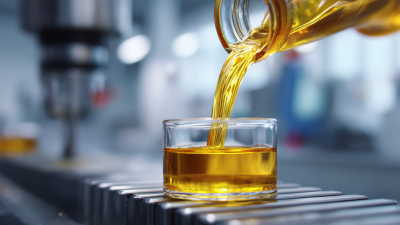
Mineral lubricants are pretty essential when it comes to keeping machinery running smoothly and lasting longer, no matter the industry. I came across a report from Global Industry Analysts that predicts the worldwide lubricant market could hit around $200 billion by 2025, and mineral lubricants are expected to grab a good chunk of that. Basically, these lubricants come from refining crude oil, and they do a really impressive job preventing friction, helping machines stay cooler, and protecting parts from wear and tear. That's why they’re so important for keeping machines efficient and reliable. Whether we're talking about cars, manufacturing plants, or power stations, companies are always on the lookout for top-notch mineral lubricants because they want their machinery performing at its best and minimizing downtime.

What is Mineral Lubricant and How It Benefits Your Machinery Performance

But it’s not just about lubrication—it actually helps save energy and boosts productivity, too. One study I read from Research and Markets mentioned that using high-quality mineral lubricants can lower machine operating temperatures by as much as 20%. That’s a big deal because it means less wear and tear over time. Plus, businesses are realizing that investing in good mineral lubricants pays off in the long run since they last longer and don’t need to be replaced as often, saving money down the line. As this field continues to evolve, understanding how to pick the right mineral lubricant for each specific job is going to be a key factor for companies trying to stay competitive and get the most out of their machinery.

What is Mineral Lubricant? A Comprehensive Overview of Its Composition and Types

Mineral lubricants are derived from refining crude oil, which makes them a cornerstone in the machinery lubrication landscape. These lubricants consist primarily of hydrocarbon chains and may contain various additives to enhance their performance characteristics. According to the National Lubricating Grease Institute (NLGI), about 90% of lubricants used in industrial applications are mineral-based, indicating their significant prevalence in the market.

They are categorized into several types, including paraffinic, naphthenic, and aromatic, each with distinct properties that suit specific applications within machinery.

Paraffinic lubricants are known for their excellent thermal stability and low volatility, making them ideal for high-temperature applications. Naphthenic lubricants, on the other hand, offer superior solvency and are often used in environments where contamination is a concern.

A report by MarketsandMarkets suggests that the global mineral lubricants market is expected to reach USD 75 billion by 2025, driven by demand in various sectors like automotive and manufacturing.

Understanding these types and their compositions allows engineers and maintenance professionals to select the right mineral lubricant, ultimately enhancing machinery performance and lifecycle.

Key Benefits of Mineral Lubricants: Enhancing Machinery Efficiency and Longevity

Mineral lubricants play a pivotal role in enhancing the efficiency and longevity of machinery. Derived from refining crude oil, these lubricants possess excellent properties that significantly reduce friction between moving parts. By providing a protective film, mineral lubricants minimize wear and tear, promoting smoother operation. This not only helps in maintaining optimal performance levels but also reduces the frequency of maintenance and potential breakdowns.

Another key benefit of mineral lubricants is their thermal stability, which enables them to perform effectively within a wide temperature range. This characteristic ensures that machinery operates reliably under varying conditions, preventing overheating and potential damage. Moreover, mineral lubricants often include additives that improve their resistance to oxidation and sludge formation, further enhancing their lifespan and functionality.

Consequently, investing in high-quality mineral lubricants can lead to substantial cost savings over time, thanks to extended machinery life and improved operational efficiency.

How Mineral Lubricants Reduce Friction: Insights from Industry Research

Mineral lubricants, derived from refining crude oil, play a crucial role in reducing friction in various machinery applications. Industry research highlights that these lubricants form a protective film on metal surfaces, preventing direct contact and thereby minimizing wear and tear. This protective layer is essential for maintaining efficiency in machinery, as it significantly reduces the energy loss caused by friction. Furthermore, mineral lubricants can withstand high temperatures and pressures, ensuring consistent performance even under strenuous conditions.

Studies also indicate that the viscosity of mineral lubricants can be tailored to suit specific machinery requirements, enhancing their effectiveness in diverse environments. By optimizing the flow characteristics, these lubricants ensure smooth operation and greater reliability of equipment. The ability of mineral lubricants to disperse heat generated during operation further contributes to their efficiency, helping to extend the lifespan of components. Ultimately, the research underscores the importance of selecting the right mineral lubricant to achieve optimal machinery performance while minimizing operational costs.

Industry Statistics: The Impact of Mineral Lubricants on Machinery Uptime and Maintenance Costs

Mineral lubricants play a significant role in enhancing machinery performance, particularly in industrial applications. Recent industry statistics reveal that the usage of mineral lubricants leads to substantial improvements in machinery uptime and reductions in maintenance costs. For instance, the global open gear lubricants market is anticipated to grow at a CAGR of 3.3%, highlighting the increasing reliance on effective lubrication solutions to optimize operations and prevent equipment failures.

Moreover, the forestry lubricants market is projected to expand from USD 5.61 billion in 2024 to USD 17.64 billion by 2034. This impressive growth underscores the critical role that mineral-based lubricants play in maintaining equipment efficiency within the forestry sector. By incorporating mineral lubricants into their maintenance strategies, industries can achieve longer intervals between equipment servicing and reduce the likelihood of unexpected breakdowns, ultimately leading to cost savings and improved productivity.

Tips for Choosing the Right Mineral Lubricant for Your Specific Machinery Needs

When selecting the right mineral lubricant for your machinery, it's essential to consider several key factors to ensure optimal performance. Firstly, the viscosity grade of the lubricant plays a crucial role in maintaining effective lubrication under various operating conditions. According to the Society of Tribologists and Lubrication Engineers (STLE), using a lubricant with the appropriate viscosity can reduce wear rates by up to 40%, enhancing machinery lifespan and efficiency.

Additionally, the specific application and environment of your machinery greatly influence lubricant choice. For instance, a report by the American Petroleum Institute (API) highlights that machinery operating in extreme temperatures or under high pressures may require specially formulated mineral lubricants that contain additives to prevent oxidation and foam formation. Investing in high-quality lubricants tailored for your specific operational conditions can result in improved energy efficiency, which is critical in today's cost-sensitive industries.

Lastly, it is prudent to consult manufacturer recommendations and service manuals to ensure compatibility with your equipment. The correct mineral lubricant not only enhances performance but can also lead to significant cost savings, as evidenced by a study from the National Lubricating Grease Institute (NLGI), which noted that effective lubrication strategies can reduce maintenance costs by approximately 25%.

What is Mineral Lubricant and How It Benefits Your Machinery Performance - Tips for Choosing the Right Mineral Lubricant for Your Specific Machinery Needs

Property Description Benefits for Machinery Tips for Selection
Viscosity A measure of a fluid's resistance to flow. Ensures proper lubrication at various temperatures, reducing wear. Choose based on operating temperature and machinery specifications.
Additives Chemicals added to enhance performance. Improves resistance to oxidation, corrosion, and foam. Select additives based on equipment needs and environmental conditions.
Temperature Range The temperature limits within which a lubricant performs effectively. Prevents breakdown and maintains effectiveness in extreme conditions. Consider the maximum and minimum working temperatures of machinery.
Base Oil Type The primary oil in the lubricant, such as mineral or synthetic. Mineral oils are cost-effective and provide good lubrication. Assess the compatibility with your machinery’s materials.
Application Method How the lubricant is applied to the machinery. Ensures consistent coverage and protection of moving parts. Choose a lubricant compatible with the application equipment.

Best Practices for Storing and Using Mineral Lubricants to Maximize Performance

When it comes to maximizing machinery performance, proper storage and usage of mineral lubricants play a critical role. First and foremost, it is essential to store these lubricants in a cool, dry environment, away from direct sunlight and heat sources. This helps in preventing degradation of the lubricant and ensures its longevity. Additionally, keeping the containers tightly sealed prevents contamination from dust and moisture, which could adversely affect the lubricant's efficacy.

When utilizing mineral lubricants, it is vital to follow the manufacturer's specifications regarding application methods and intervals. Regular monitoring of lubricant levels and routine changes based on operating conditions can also significantly enhance machinery performance. Furthermore, using the correct type of mineral lubricant tailored for specific machinery requirements ensures optimal contact and coverage, reducing friction and wear on moving parts. Adhering to these best practices leads to improved operational efficiency and extends the lifespan of machinery.

The Essential Guide to ACPL-206 Compressor Lubricant: Benefits, Applications, and Best Practices

ACPL-206 Compressor Lubricant stands out as a crucial component for maintaining the performance and longevity of compressors. This high-quality lubricant is formulated with hydrogenated base oil, which provides excellent thermal stability and resistance to oxidation. When paired with a high-performance compound additive, ACPL-206 significantly enhances the lubricant’s ability to reduce friction and wear, improving the efficiency of compressor operations. This ensures that the machinery runs smoothly, minimizing downtime and maintenance costs.

The applications of ACPL-206 extend across various industries, including refrigeration, air conditioning, and manufacturing. By utilizing this premium lubricant, operators can achieve optimal performance in both low and high temperature environments. Its superior formulation aids in foam control and separation, which is vital in systems where air and oil might mix. Adopting best practices, such as regular monitoring of lubricant conditions and timely changes, ensures that the compressors operate at peak efficiency, extending their lifespan and reducing the risk of breakdowns. With its impressive benefits, ACPL-206 Compressor Lubricant is a smart investment for any operation reliant on compressor technology.

FAQS

: What are mineral lubricants derived from?

: Mineral lubricants are derived from refining crude oil, which makes them a key component in machinery lubrication.

What types of mineral lubricants are there?

Mineral lubricants are categorized into paraffinic, naphthenic, and aromatic, each with distinct properties suitable for specific applications.

Why are paraffinic lubricants preferred for high-temperature applications?

Paraffinic lubricants are known for their excellent thermal stability and low volatility, making them ideal for high-temperature environments.

What factors should be considered when choosing a mineral lubricant?

Key factors include the viscosity grade, specific application and environment of machinery, and manufacturer recommendations for compatibility.

How can using the correct mineral lubricant impact machinery performance?

Using an appropriate lubricant can reduce wear rates by up to 40%, enhancing the lifespan and efficiency of machinery.

What storage conditions are best for mineral lubricants?

Mineral lubricants should be stored in a cool, dry environment, away from direct sunlight and heat sources, and containers should be tightly sealed to prevent contamination.

How can proper usage of mineral lubricants maximize performance?

Following manufacturer specifications for application methods, monitoring lubricant levels, and using the right type of lubricant can enhance operational efficiency and extend machinery lifespan.

What are the economic benefits of effective lubrication strategies?

Implementing effective lubrication strategies can lead to significant cost savings, potentially reducing maintenance costs by approximately 25%.

What is driving the growth of the global mineral lubricants market?

The demand in various sectors such as automotive and manufacturing is driving the growth of the global mineral lubricants market, which is expected to reach USD 75 billion by 2025.

Conclusion

Mineral lubricants play a vital role in optimizing machinery performance by enhancing efficiency and longevity. Composed of refined petroleum products, these lubricants come in various types tailored to meet specific operational needs. Their primary function is to reduce friction between moving parts, which is crucial for minimizing wear and tear, ultimately leading to lower maintenance costs and increased machinery uptime.

At Shanghai Jiongcheng Industrial Co., Ltd., we emphasize the importance of selecting the right mineral lubricant for various applications, including compressor and vacuum pump lubricants. Our commitment to advanced technology and rigorous quality checks ensures that our mineral lubricants deliver reliable performance, allowing businesses to maximize operational efficiency while mitigating downtime.

Liam

Liam

Liam is a dedicated marketing professional with a profound expertise in the lubrication industry, specializing in high-temperature chain lubricants and integral lubrication solutions. With a focus on compressor lubricants, vacuum pump lubricants, and refrigerated compressor lubricants, he is......
Previous Advantages of Using the Best Reliant Dust Collector 720 for Your Manufacturing Needs