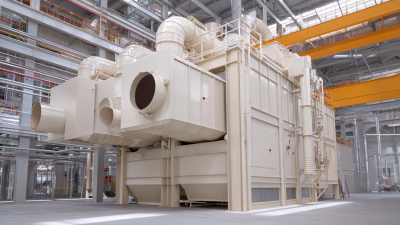
Figuring out the best dust collector for 2026 isn’t just about spotting a shiny winning design. It’s more about matching the right equipment to what you actually need to get the job done. You’ve got options like cartridge collectors, baghouses, cyclones, wet collectors, and even portable units. Each one is better suited for different dust volumes, particle sizes, space constraints, and maintenance schedules. For example, a woodworking shop that kicks up a lot of fine sanding dust will have different needs compared to a metalworking area dealing with grinding debris. That’s a pretty big deal, because choosing the wrong system can leave dust clinging to surfaces, cause filters to clog up fast, or guzzle more energy than it really needs to.
Dust collectors work by slowing, redirecting, or filtering air so particles leave the airstream. In a cyclone, incoming air spins inside a cone. Heavier dust moves outward and drops into a bin, while cleaner air exits above. The U.S. EPA’s Cyclones fact sheet reports typical particulate collection efficiencies of 70–90% for conventional units; higher-efficiency designs can perform better. Fine dust is harder to remove. That matters.
Fabric filters and cartridge collectors use porous media to trap particles as air passes through. Dust builds into a surface layer, which can improve filtration but also restrict airflow. Pulse-jet cleaning sends brief bursts of compressed air through the media, dislodging dust into a hopper. The EPA’s fabric-filter fact sheet reports collection efficiencies commonly above 99%, though actual performance depends on particle size, filter condition, and system design. High numbers need context.
In practice, capture begins at the hood, not inside the collector. A poorly positioned hood may let a visible plume escape before the duct carries it away. Cyclones often serve as pre-cleaners for heavier material, while filters handle finer dust downstream. Pressure-drop readings and dust buildup offer useful clues, but neither tells the whole story alone. A tidy diagram can make the process look simpler than it is. Dust varies.
Dust collectors differ in how they capture particles, and the right choice depends on the material, airflow, and work pattern.
Cartridge collectors use pleated filters to provide substantial filter area in a compact housing. They suit many fine, dry dusts, including common woodworking and metalworking particles. Operators still need to check filter loading and compressed-air cleaning settings; a compact unit is not automatically the best fit.
Baghouse collectors pass dusty air through fabric bags, which trap particles as cleaned air exits. They are often selected for steady, higher-volume processes, though bag changes and available floor space matter.
Cyclone collectors spin incoming air so heavier chips and grit fall into a bin. They can protect a finer filter downstream, but usually do not capture the smallest particles on their own.
It depends.
Wet collectors bring dust into contact with liquid, making them useful for certain combustible or sticky dusts when properly engineered. They require water management and suitable separation of collected material.
Portable extractors serve machines used intermittently, while central systems connect several pickup points through ductwork.
Before choosing, review the dust’s properties, required airflow at each hood, filter maintenance access, and applicable safety guidance. Real installations can disappoint when duct losses or changing production loads are overlooked.
A dust collector must match the amount, particle size, and behavior of the dust—not just the machine’s airflow rating. Cyclones suit heavy, coarse loads such as wood chips and sanding debris. Their swirling airflow drops larger particles into a bin before they reach the filter. The U.S. EPA’s Cyclones fact sheet reports typical collection efficiencies of 70–90 percent, with results depending on particle size and design. They reduce filter loading, but fine dust often passes through. Not always enough.
For fine, dry dust, cartridge collectors provide substantial filter area in a compact footprint. Pulse cleaning can help maintain airflow as dust builds up. Heavy, continuous loads may still raise pressure drop quickly, especially when dust cakes on the media. The EPA’s Fabric Filters fact sheet reports typical collection efficiencies above 99 percent, though actual performance depends on operating conditions and particle characteristics. Baghouses are often better suited to large, steady dust volumes because they hold more filter media and can handle sustained loading. Sticky or damp dust can complicate both systems. In a real shop, checking the dust’s moisture, particle size, and filter pressure over time is more reliable than choosing from a chart alone. That detail gets missed.
A dust collector’s name tells little about its performance. Compare airflow at the hood, particle size, pressure drop, and collection efficiency under actual operating conditions. A cyclone can handle heavy dust and coarse chips with relatively little maintenance, but it is weaker on fine particles. The U.S. EPA’s Cyclones fact sheet reports typical total particulate removal of 70–90%, while PM2.5 removal may range from 0–40%. Fine dust escapes. That gap matters when sanding or machining creates a visible haze.
Fabric filters can capture much finer particles, but their results depend on filter media, seals, cleaning cycles, and dust loading. The EPA’s Fabric Filter fact sheet gives typical collection efficiencies of 99–99.9%. These figures are not a promise for every installation; airflow leaks or clogged filters can undermine performance. Numbers need context. Compare the stated efficiency with the particle sizes measured at your process, and check pressure drop as filters load. A rising pressure drop can signal higher fan energy use or restricted airflow. I would also inspect duct joints and the pickup hood, not just the collector. This is easy to overlook. A technically strong unit may still miss dust if the hood sits too far from the tool. Dust properties vary, too, so a neat comparison table cannot replace a site-specific test.
| Collector type | Fine-dust performance | Typical strengths | Key trade-offs | Maintenance considerations | Common applications |
|---|---|---|---|---|---|
| Cartridge collector | Good to very good when fitted with suitable filter media and correctly sized for the airflow and dust load. | Compact design; large filter area in a relatively small footprint; pulse cleaning is common. | Sticky, oily, or high-moisture dust can blind some media; performance depends on filter selection and operating conditions. | Inspect filters, seals, and cleaning system; replace cartridges when damaged or when pressure drop remains excessive. | Fine dry dust from cutting, grinding, sanding, and many general manufacturing processes. |
| Fabric baghouse | Good to very good with appropriate fabric, cleaning, and system design; filtration performance varies by application. | Handles substantial dust loads and a wide range of industrial operating conditions; multiple cleaning methods are available. | Often requires more space than compact cartridge units; unsuitable fabric or operating conditions can cause blinding or condensation problems. | Check bags, cages, seals, and cleaning cycles; monitor pressure drop and inspect for leaks or fabric wear. | Large-volume process dust, including mineral, cement, metalworking, and bulk-material applications. |
| Cyclone separator | Limited for very fine particles when used alone; generally more effective on larger, heavier particles. | No filter media to replace; can remove a substantial share of coarse dust before downstream filtration. | Does not usually provide final fine-particle control by itself; pressure loss and separation efficiency depend on geometry and airflow. | Check for erosion, plugging, air leaks, and proper dust discharge. | Pre-separation of coarse dust, chips, and heavier particles ahead of a baghouse or cartridge collector. |
| Wet scrubber | Can capture fine particles when designed for the required duty; performance varies with scrubber type and operating conditions. | Uses liquid to collect particles; can be suitable for hot, moist, or certain process streams that are difficult for dry filters. | Creates wastewater or slurry; requires water management and corrosion control. Not suitable for every dust, especially water-reactive materials. | Monitor liquid flow, pH where applicable, nozzles, pumps, demisters, and slurry handling. | Processes involving hot or humid exhaust, or applications where wet collection is specifically engineered and permitted. |
| Electrostatic precipitator (ESP) | Can achieve high collection performance on suitable particulate streams when properly designed and operated. | Collects particles on charged surfaces rather than using conventional filter bags or cartridges; suitable for some large, continuous processes. | Higher system complexity; performance can be affected by particle properties, gas conditions, and electrical operating conditions. | Requires inspection of electrodes, collection plates, power supplies, and cleaning mechanisms; electrical safety procedures are essential. | Large-scale industrial exhaust streams where an ESP is appropriate for the process and particulate characteristics. |
Comparison note: “Best” depends on particle size, dust properties, required airflow, emissions limits, available space, operating cost, and maintenance capacity. Fine-dust performance is application-specific; confirm system sizing, filter or collection performance, and applicable safety requirements with a qualified dust-control professional.
Matching a collector to an industrial application starts with the dust itself. In woodworking shops, sanding and sawing create fine particles that can remain airborne after the machine stops. Cartridge collectors suit many such processes, especially where floor space is limited and filters can be reached for inspection. For heavier chips and coarse debris, a cyclone can remove larger material before it reaches a final filter. It is not a complete solution for fine dust, though.
Metalworking often produces grinding dust with different weight, heat, and spark risks. A cartridge system may work for some applications, but the process and material need careful assessment before selection. Wet collectors can be considered when dust characteristics make dry collection unsuitable, provided the resulting slurry can be managed safely. Baghouse collectors are often used for high-volume processes such as mineral handling or bulk material transfer.
Fit matters more. Collector capacity, duct layout, filter cleaning, and maintenance access all affect real performance. A unit that looks adequate on paper may struggle when several machines run at once. Check airflow at the pickup points, not only at the collector.
Test the airflow. I have seen application choices get revisited because operators changed tools or production rates; that detail is easy to overlook.
For combustible or hazardous dust, involve a qualified specialist to assess the full system and its controls.
Choosing the right dust collector starts with the material and tools you use, not a horsepower claim. A table saw and planer can produce large volumes of chips, while sanding creates finer, airborne dust. Check each tool’s airflow requirements, then consider how many machines may run at once. Small details matter. Long ducts, narrow bends, and restrictive fittings can reduce airflow at the tool.
For a small workshop with one machine in use at a time, a portable collector may be easier to position and maintain. A larger shop with several connected tools may benefit from a central system, provided its fan can handle the required airflow and duct resistance. Compare published airflow and static-pressure data under similar conditions; a free-air rating alone may not reflect performance in your setup. Filter choice matters, too. Fine-dust work calls for suitable filtration and careful filter maintenance.
Think about floor space, noise, emptying frequency, and where collected dust will go. A collector that is powerful but awkward to service may get neglected. Measure your duct route before buying, and leave room for filter changes and container removal. Calculations can miss real-world restrictions, especially in improvised duct layouts. That is worth admitting. If possible, test airflow at the machine after installation and adjust the layout when dust escapes.
It spins incoming air inside a cone. Heavier dust moves outward and falls into a bin. Fine particles may escape.
Air passes through porous media that traps particles. Dust builds on the surface, which can improve filtration but restrict airflow.
Brief bursts of compressed air shake dust from the filter media into a hopper. The settings still need checking.
Cyclones can handle chips, grit, and sanding debris. They often reduce the load on a finer filter downstream.
Often, no. Typical collection efficiency is reported at 70–90%, but results vary with particle size and design.
Baghouses can suit steady processes with large dust volumes. They need space, and bag changes require maintenance access.
They offer substantial filter area in a compact housing. Heavy, continuous loading can still raise pressure drop quickly.
Check dust size and moisture, airflow at each hood, duct losses, and filter access. A tidy chart may miss real shop conditions.
Dust must enter the hood before it reaches the collector. A misplaced hood can let a visible plume escape. Dust varies.
Choosing the best Dust Collector in 2026 starts with understanding how it draws in dust-laden air and separates particles before clean air is released or recirculated. Available types use different separation methods, such as airflow changes, filter media, or combinations of technologies. Their effectiveness depends on the size, concentration, and behavior of the dust, as well as the volume of air the system must handle.
To compare options, consider filtration efficiency, airflow capacity, pressure drop, maintenance needs, operating conditions, and total cost. A collector suited to light, intermittent dust may not perform well under a heavy or continuous load, so match the system to the process and workspace. Evaluate the type and amount of dust, required air movement, installation constraints, and future capacity needs. The best choice is one that balances reliable collection, practical maintenance, and performance requirements for its intended industrial application.