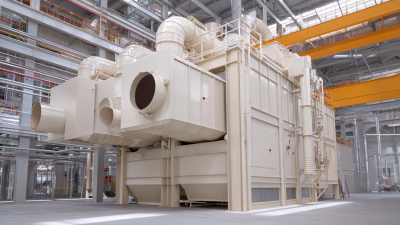
Picking out the best dust collector isn’t just about looking at airflow ratings or flashy product claims. The needs of a woodworking shop, a metalworking area, or a food processing plant all differ—and so do their dust hazards. Each setting calls for a specific type of filtration, enough capacity to handle the dust, and safety features that really work. Using the wrong machine might mean it clogs up fast, wastes energy, or worse—lets tiny particles escape back into the workspace.
In this guide, I’ll walk you through common types of dust collectors—single-stage, two-stage, cartridge, cyclone, and wet systems. We’ll look at stuff like particle size, how much air they move, filter efficiency, noise levels, how much maintenance they need, and what they cost to run. Honestly, experience really counts here. A collector that works great with a small table saw might not cut it when you’re running several machines at once. And don’t forget about hose length; those long, narrow ducts can seriously cut down on suction. Sometimes, it’s the little things that make all the difference in how well these things actually perform.
There’s no one-size-fits-all answer, and that’s totally OK to admit. Specs can look super impressive, but reality in your shop might tell a different story. The best approach is a mix of manufacturer info, safety guidelines, and real-world measurements from your own workspace. You’ll also want to think about factors like combustible dust, grounding protocols, how often you need to swap filters, and how to handle disposal. These aren’t just minor details—they’re important. Carefully compare each option against what you actually need, and you’ll be able to pick a dust collector that helps keep the air cleaner, your work smoother, and everyone safer. Keep in mind, even after you install something, it might need some tweaking once you see how it performs in action. So, testing things out in real life is still pretty essential.
Choosing the best dust collector starts with air filtration, not horsepower alone. A collector must capture dust near the source, move enough air, and retain particles safely. Cartridge systems offer compact filtration and large surface area. Baghouse systems can suit heavier dust loads and continuous industrial work. However, poor duct design can weaken either system.
Particle size changes the risk. Fine respirable dust can remain airborne after visible debris disappears. The U.S. Occupational Safety and Health Administration limits respirable crystalline silica exposure to 50 micrograms per cubic meter over an eight-hour shift. The U.S. Environmental Protection Agency states that true HEPA filtration captures at least 99.97% of particles measuring 0.3 microns. These figures matter, but filter efficiency alone cannot fix leaks, low airflow, or an uncovered emission point. In practice, the weakest detail often controls performance. I have seen clean filters perform poorly because operators ignored damaged seals. That mistake is easy to repeat.
Tips: Measure airflow at the pickup point, not only at the fan. Check pressure drop, filter loading, and duct leakage regularly. Use staged filtration when fine particles require higher protection. Keep a written maintenance log. The U.S. National Institute for Occupational Safety and Health recommends exposure monitoring and engineering controls for hazardous dust. Its guidance also reminds users that personal protective equipment should not replace source capture. A perfect installation is unlikely. Continuous inspection is more realistic.
What Is the Best Type of Dust Collector?
Main Dust Collector Types and Their Operating Principles
The best dust collector depends on particle size, moisture, temperature, and production volume. An inspection should begin with dust behavior, not equipment price. A cyclone separates heavier particles through centrifugal force. Air enters tangentially, spins downward, and carries collected dust into a hopper. The U.S. EPA Air Pollution Control Technology Fact Sheet reports typical cyclone efficiency of roughly 70% to 95%, depending on design and particle size. It works well as a pre-cleaner, but it rarely controls fine dust alone.
Fabric baghouses and cartridge collectors force contaminated air through filter media. Dust forms a surface layer, called a filter cake, which improves capture but increases pressure drop. EPA data commonly places well-designed fabric filters above 99% collection efficiency. Cartridge units need less floor space, although cramped pleats may load quickly. Wet scrubbers use liquid droplets to capture particles and can handle hot or sticky dust. They also create wastewater. Electrostatic precipitators charge particles electrically, then attract them to collection plates. They suit high airflow, but performance can change with dust resistance and humidity.
Worker exposure still matters. OSHA sets the respirable crystalline silica permissible exposure limit at 50 micrograms per cubic meter over eight hours. A collector should therefore be evaluated with airflow readings and breathing-zone sampling, not appearance alone. In practice, poor hood placement can defeat an excellent filter. That is easy to miss. A cheaper system may consume more energy through high pressure loss, while an oversized system can waste fan capacity. The U.S. EPA Air Pollution Control Cost Manual treats energy, maintenance, and disposal as major lifecycle costs.
| Dust Collector Type | Operating Principle | Typical Particle Size Range | Typical Filtration Efficiency | Best-Suited Applications | Main Advantages | Limitations and Selection Considerations |
|---|---|---|---|---|---|---|
| Cyclone Separator | Uses centrifugal force created by a spiral airflow to drive heavier dust particles toward the wall, where they fall into a collection hopper. | Generally most effective for particles above approximately 10 micrometres; performance improves with larger and denser particles. | Typically about 70%–95%, depending on design, airflow, particle density, and operating conditions. | Pre-separation of coarse wood chips, metal particles, mineral dust, and other heavy particulate matter. | No filter media, low maintenance, high-temperature capability, and relatively low operating cost. | Less effective for fine or low-density dust. Often used as a pre-cleaner before a fabric or cartridge collector. |
| Fabric Baghouse Collector | Dust-laden air passes through woven or felted filter bags. Dust forms a filter cake on the fabric surface and is periodically removed by pulse-jet, reverse-air, or shaker cleaning. | Effective for fine particles, commonly from submicron sizes up to larger dust particles. | Commonly about 99%–99.9% when correctly designed and maintained. | Large-volume applications such as cement, minerals, grain processing, foundries, woodworking, and bulk material handling. | High collection efficiency, large capacity, and broad media selection for different temperatures and chemical conditions. | Requires regular filter inspection and cleaning. Moisture, condensation, abrasive dust, and incompatible chemicals can damage the bags. |
| Cartridge Dust Collector | Air flows through pleated cartridge filter media, which provides a large filtration area in a compact housing. Compressed-air pulses remove accumulated dust. | Highly effective for fine particles, including dust in the approximate 0.3–10 micrometre range. | Typically about 99% or higher with suitable filter media and proper airflow control. | Welding fumes, fine metal dust, pharmaceutical powders, plastic dust, grinding, and compact process equipment. | Compact footprint, high filtration area, easy filter replacement, and efficient fine-particle capture. | Cartridges can clog when exposed to heavy, sticky, fibrous, or moisture-laden dust. Pressure drop must be monitored. |
| Electrostatic Precipitator | Particles are electrically charged and attracted to oppositely charged collecting plates or tubes. Rapping or washing removes the accumulated dust. | Can capture fine particles, including particles below 1 micrometre, when electrical conditions and gas properties are suitable. | Often about 95%–99.9%, depending on design, particle resistivity, gas flow, and operating voltage. | Large industrial gas streams, combustion processes, mineral processing, and applications requiring low pressure drop. | Handles high gas volumes, has relatively low pressure loss, and can operate continuously at elevated temperatures. | Higher initial complexity and cost. Performance can be affected by dust resistivity, moisture, gas composition, and electrical safety requirements. |
| Wet Scrubber | Liquid droplets or a liquid film contacts the dust-laden gas. Particles are captured by impaction, interception, diffusion, or absorption and removed as slurry. | Can capture coarse and fine particles; high-energy designs are more suitable for very fine particulate matter. | Approximately 90%–99% or higher, depending on scrubber type, liquid-to-gas ratio, and pressure drop. | Hot, humid, combustible, sticky, or chemically reactive dust; gas streams that also require gas absorption or cooling. | Reduces fire and explosion risk for some combustible dusts, cools hot gases, and can control both particles and selected gaseous pollutants. | Creates wastewater or slurry, may cause corrosion, and requires water treatment, mist elimination, and additional maintenance. |
| Inertial Separator | Changes in airflow direction cause particles with greater inertia to separate from the gas stream and enter a collection chamber. | Generally suitable for larger particles, commonly above approximately 20–50 micrometres. | Usually about 50%–90%, depending on particle properties and separator configuration. | Coarse dust removal, material transfer points, furnace exhaust pre-cleaning, and protection of downstream filters. | Simple construction, low maintenance, and no filter media or moving parts in many designs. | Limited fine-particle performance and often insufficient as the sole collector where strict emission limits apply. |
| Oil-Mist Collector | Uses impaction, coalescence, centrifugal action, or filtration to combine fine oil droplets into larger droplets for drainage or recirculation. | Designed primarily for liquid aerosols and oil mist, often from approximately 0.5–10 micrometres. | Commonly about 90%–99% for the specified mist loading and particle size. | Metalworking fluids, machining centers, grinding operations, and processes producing coolant or lubricant mist. | Improves indoor air quality, reduces residue on equipment, and may allow recovery of collected fluid. | Not a general-purpose dry-dust collector. Filter selection must account for oil type, temperature, fire risk, and fluid loading. |
| Portable Shop Dust Collector | A fan creates localized suction through a hose or duct, while a fabric bag, cartridge, or pleated filter captures the transported dust. | Depends on the installed filter; coarse chips may be separated before filtration, while fine dust requires a high-efficiency filter. | Ranges widely, approximately 80%–99.9%, depending on filter quality, sealing, and maintenance. | Small workshops, intermittent woodworking, light fabrication, maintenance areas, and temporary source capture. | Mobile, easy to install, relatively affordable, and suitable for low-to-moderate airflow requirements. | Limited airflow and storage capacity. It may be unsuitable for continuous industrial service or hazardous combustible dust without appropriate safety controls. |
| Centralized Modular Collector | A remotely located fan and filter system serves multiple pickup points through a duct network. Automatic cleaning maintains filter permeability. | Can handle coarse, fine, and mixed dust depending on the selected pre-separator and filter media. | Typically about 99% or higher when properly sized, sealed, and maintained. | Factories with multiple machines, continuous production lines, and processes requiring centralized waste handling. | Supports multiple sources, improves housekeeping, enables centralized discharge, and can be configured for expansion. | Higher design and installation complexity. Duct velocity, pressure balance, fan sizing, noise, and combustible-dust protection require professional engineering. |
What Is the Best Type of Dust Collector?
How Dust Characteristics Affect Collector Selection
The best dust collector depends on the material, not only the required airflow. Fine dust travels. Particles below ten microns can remain airborne and penetrate weak filtration systems. Larger, heavier particles may separate efficiently in a cyclone before reaching final filters. A cartridge collector can suit fine, dry dust, while a baghouse often handles higher volumes and longer operating cycles.
Moisture changes everything. Damp dust can clog filter media, increase pressure drop, and create unstable airflow. Fibrous particles may bridge across narrow passages instead of filtering smoothly. Abrasive minerals can wear through elbows, hoppers, and filter surfaces. A practical assessment should measure particle size, density, moisture, temperature, and dust loading before equipment selection. Guessing from appearance is unreliable.
Combustible dust requires careful engineering. Grounding, bonding, venting, isolation, and certified safety controls may be necessary, depending on local requirements. Fine particles also behave differently after grinding, drying, or mixing. Test before buying. A field trial can reveal blinding, leakage, or difficult discharge problems that specifications miss. I have seen designs focus heavily on airflow while overlooking hopper buildup. That mistake deserves more attention. Collector selection should also consider cleaning method, replacement access, noise, and real maintenance habits. An impressive pressure rating cannot compensate for unsuitable filter media.
The best dust collector depends on filtration efficiency, capacity, and maintenance demands. A high-efficiency cartridge system can capture fine particles in compact workshops. According to the U.S. EPA, HEPA filtration removes at least 99.97% of 0.3-micron particles under controlled test conditions. Real performance still depends on airflow, sealing, and filter loading. A collector with excellent media can fail if duct velocity is too low.
Capacity matters just as much. A small bin fills quickly during continuous cutting, creating more interruptions and possible dust leakage. Larger systems support longer production cycles, but they require more floor space and stronger airflow. The ACGIH Industrial Ventilation guidelines emphasize adequate capture velocity at the dust source, not just impressive filter ratings. This is where many buying decisions go wrong.
Tips: Check airflow at the tool, not only at the collector inlet. Track filter pressure drop with a gauge. ASHRAE guidance recognizes rising resistance as filters load, increasing fan demand and reducing collection performance. Empty bins before they overflow. Inspect seals monthly. A washable pre-filter may extend service life, but it can reduce airflow when neglected. No option is maintenance-free. Even a powerful collector becomes inefficient when ducts clog, filters stay dirty, or operators ignore warning signs. EPA and OSHA guidance also support controlling dust at its source, with housekeeping and hazard assessment built into the system design.
The best dust collector depends on the material, airflow, and exposure risk. A woodworking shop may need a cartridge collector for fine sawdust, while a metalworking line may require spark control and abrasion-resistant components. For cement, minerals, and pigments, a baghouse often handles heavy dust loads more reliably. Application comes first.
Airflow must match the machine, not just the room. A poorly sized system can leave visible dust on ledges and around cutting tools. OSHA’s respirable crystalline silica standard sets an 8-hour permissible exposure limit of 50 micrograms per cubic meter. It also sets an action level of 25 micrograms. These figures make source capture and filter maintenance practical necessities, not optional upgrades.
Combustible dust requires deeper review. NFPA guidance recommends evaluating dust properties, ignition sources, housekeeping, and explosion protection before equipment selection. Fine plastic or grain dust may behave differently from coarse wood chips. Test the dust when uncertainty remains. I have seen systems perform well on paper but fail after duct changes or overloaded filters. That is a design lesson worth admitting. Select the collector around real production conditions, including peak loading, moisture, temperature, and cleaning cycles.
The best dust collector depends on your material, airflow needs, and workplace hazards. Safety should guide the selection, not price alone. Fine wood dust, metal particles, and chemical powders behave differently. Some dust can ignite when suspended in air. A qualified professional should assess dust characteristics before equipment is ordered. Testing is often overlooked.
Choose a collector with suitable filtration, airflow, and pressure capacity. The system should prevent dust from escaping into occupied areas. Grounding and bonding help control static electricity. Spark detection, explosion relief, or isolation devices may also be necessary. Requirements vary by location and industry. Check current fire, building, and occupational safety standards before installation. Keep records of inspections, maintenance, and filter changes. Those records can reveal a problem before workers notice it.
Tips:
Install ductwork with smooth bends and secure joints. Keep the collector away from exits and heavily occupied areas when practical. Provide safe access for filter replacement. Never place collected dust near ignition sources. A pre-installation airflow test is useful. It can expose weak pickup points. I once underestimated how quickly a poorly sealed connection could reduce capture performance. That mistake changed the layout review process. Allow space for cleaning, future repairs, and unexpected modifications. A system that fits today may restrict tomorrow’s production.
What Is the Best Type of Dust Collector?
A Practical Framework for Choosing the Best Dust Collector
Choosing the best dust collector starts with the dust, not the machine’s advertised capacity. Identify the material, particle size, moisture level, and daily production volume. Fine sanding powder needs different filtration from heavy chips or sticky fibers. A workshop producing both should assess each process separately.
Measure airflow at the tool, because free-air ratings can look impressive. Capture quality matters more than a large number. Record hose length, bends, inlet size, and static pressure. A short, direct duct often performs better. Small details matter. For portable work, a compact unit may improve convenience, while fixed systems usually provide stronger central extraction. Filter efficiency, cleaning method, collection-bin size, noise, and replacement costs also deserve attention.
Safety changes the decision. Fine or combustible dust requires suitable equipment, grounding, inspection, and professional risk assessment. Never assume a standard collector is appropriate for every material. In practical evaluations, operators often focus on motor power and overlook filter loading. That mistake can reduce airflow within days. I would also question any calculation based only on ideal conditions. Real workshops have open gates, leaking joints, blocked filters, and inconsistent maintenance. A reliable choice should match measured performance, service habits, available space, and the workers’ actual routine. The best specification is useless if the team avoids emptying the bin or cleaning the filter.
Filtration performance varies with particle size, airflow, filter media, dust loading, and system design. Cyclones are commonly used as pre-separators for larger particles, while baghouses and cartridge collectors provide high-efficiency industrial filtration. Wet scrubbers are useful when dust control must also address combustible or sticky material, and HEPA filters are normally used as a final filtration stage for very fine particles.
The values shown are indicative engineering ranges rather than guaranteed performance ratings. Final selection should consider dust characteristics, required airflow, pressure drop, explosion risk, moisture, maintenance requirements, and applicable regulations.
: The best choice depends on dust type, airflow, production volume, and workplace hazards. Application comes first. A cartridge system suits fine dust in compact workshops. A baghouse handles heavier dust loads more steadily. No collector is maintenance-free.
Look beyond the filter rating. Check airflow, sealing, duct velocity, and pressure drop. Fine particles may escape when airflow becomes weak. A clean filter performs differently from a loaded filter.
Dust must be captured where it is created. Measure airflow near the cutting tool, not only at the collector inlet. Visible dust on ledges signals weak capture. Small duct changes can reduce performance.
Choose a bin that supports your longest production cycle. A small bin may fill during continuous cutting. Overflow can cause dust leakage and unplanned stoppages. Leave room for safe emptying.
Fine wood dust often needs efficient cartridge filtration. Metalworking may require spark control and abrasion-resistant parts. Cement, minerals, and pigments often create heavier dust loads. Moisture and temperature also affect selection.
Some suspended dust can ignite. A qualified assessment should review dust properties and ignition sources. Grounding, bonding, spark detection, relief, or isolation may be needed. Requirements vary by location.
Check filter pressure regularly and inspect seals each month. Empty bins before they overflow. Clean pre-filters before they restrict airflow. Record filter changes and inspections. Warning signs are easy to ignore.
Use smooth duct bends and secure joints. Provide safe access for filter replacement. Keep dust away from ignition sources and busy areas. Test airflow before production begins. I once underestimated a leaking connection. That mistake changed my layout review.
Choosing the best Dust Collector depends on more than airflow alone. A properly selected system captures airborne particles, protects worker health, supports cleaner production, and reduces the risk of equipment damage. Common options include cartridge collectors, baghouse systems, cyclone separators, and wet scrubbers, each using a different method to remove dust from industrial air. The right choice depends on particle size, density, moisture, temperature, abrasiveness, and whether the dust is combustible or chemically reactive.
A practical evaluation should compare filtration efficiency, air capacity, pressure drop, energy use, cleaning methods, maintenance requirements, and expected service life. The collector must also match the application, production volume, available space, ductwork, and discharge process. Safety features, ventilation design, grounding, fire prevention, regulatory compliance, and professional installation are equally important. By identifying the dust characteristics and operating conditions first, then balancing performance, reliability, maintenance, and total cost, businesses can select a Dust Collector that provides effective filtration and dependable long-term operation.