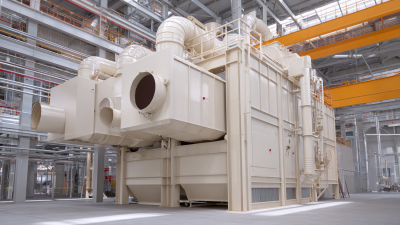
Picking a dust collector supplier you can actually rely on? That’s not just about ranking companies from one to ten. If you’re buying globally, you’ve got to look at airflow, filtration efficiency, noise levels, how easy maintenance is, and what kind of after-sales support you’ll get. A machine can look impressive on paper—until the ductwork is poorly designed, filters start clogging, or collection points are too far from the source. Then performance drops.
Bill Pentz, who’s widely cited in dust-collection circles, puts it simply: “Capture dust at the source, not after it spreads.” That advice still holds up in woodworking, metalworking, food processing, and chemical manufacturing. It also comes from real operating experience. Fine dust can settle on beams, motors, and control cabinets even when the shop floor looks perfectly clean. The small stuff? It matters.
This guide looks at ten established manufacturers—Donaldson, Camfil, Nederman, Keller, Imperial Systems, Sly, Diversitech, C&W DustTech, Airflow Systems, and Schenck Process. We compare product range, engineering capability, filtration design, customization options, service coverage, and how well each fits different industries. And no, we’re not assuming the biggest company is always the best choice.
That would be too easy.
Some buyers might prefer compact cartridge units. Others may need continuous-duty baghouse systems, explosion-risk assessments, or automated filter cleaning. Sometimes regional support matters more than a glossy brochure. Testing conditions also vary from one manufacturer to another, so direct comparisons are never perfect. Before buying, check specs, installation requirements, and local safety rules. This overview is meant to help you make a careful decision—not to replace qualified engineering advice.
Evaluation Criteria for Global Dust Collector Manufacturers
Global buyers should assess dust collector manufacturers through measurable performance, not catalog language. MarketsandMarkets’ 2024 Dust Control Systems Market analysis projects roughly 5% annual growth through 2029. That growth increases supplier choices, but also increases comparison risk. Ask for tested airflow, filtration efficiency, pressure-drop curves, and noise data. Require results from recognized laboratories. A shiny brochure is not proof.
System design must match the dust. Fine powder, metal sparks, wood particles, and hygroscopic materials need different filters and controls. OSHA and NIOSH set a respirable crystalline silica limit of 50 micrograms per cubic meter over eight hours. Therefore, manufacturers should explain how their equipment supports exposure control. Check pulse-cleaning performance, filter media compatibility, explosion-risk safeguards, and access for maintenance. Small details matter.
Supplier reliability deserves equal weight. Review factory quality procedures, weld inspection records, spare-parts availability, commissioning support, and response times across regions. Request references from facilities with similar dust loads. The ILO estimated 2.93 million work-related deaths globally in 2019, showing why weak occupational controls carry serious consequences. Still, procurement teams sometimes overvalue purchase price. That is a mistake. Energy use, replacement filters, compressed-air demand, and production downtime often decide the real cost. One uncomfortable question remains: can the supplier prove performance under your actual operating conditions, rather than under ideal test conditions?
Dust collection technology now reaches far beyond a simple filter and fan. Cartridge collectors suit fine, dry particles and compact production lines. Baghouse systems handle heavier dust loads and high-volume airflows. Cyclone separators remove larger particles before finer filtration. Wet scrubbers can control sticky or combustible dust, but they require careful water management.
Grand View Research reports that the global dust control systems market was valued at more than USD 15 billion in 2023. MarketsandMarkets expects continued growth through 2028, driven by stricter workplace exposure controls and expanding manufacturing. Product selection should begin with particle size, moisture, temperature, airflow, and dust concentration. A technically impressive collector may still perform poorly when duct design creates uneven air velocity. That detail is often underestimated. I have seen specifications look excellent on paper, yet maintenance access was almost impossible.
Tips: Ask suppliers for airflow curves, pressure-drop data, filter media ratings, and tested emission results. Compare operating costs, not only purchase prices. The U.S. Department of Energy notes that fan-system efficiency can significantly affect industrial energy use. Include automatic filter cleaning, differential-pressure monitoring, spark detection, and safe dust discharge where appropriate. OSHA technical guidance also emphasizes controlling respirable dust at its source. Performance depends on installation quality. That part deserves more attention.
Top 10 Dust Collector Manufacturers for Global Buyers
Global buyers need more than a low quotation when comparing the top ten dust collector manufacturers. Grand View Research estimates that the global dust collector market will continue expanding through 2030, driven by stricter emission controls and industrial production growth. This demand affects steel, cement, woodworking, food processing, and pharmaceutical facilities differently. A reliable manufacturer should provide filtration data, airflow calculations, pressure-drop records, and tested cleaning performance. Ask for documented results.
Practical experience also matters. A collector operating beside a grinding line faces abrasive dust, vibration, and sudden load changes. A cartridge system may suit fine particles, while a baghouse can better handle heavy industrial dust. The U.S. EPA identifies particulate-control efficiency, maintenance, and operating conditions as central performance factors. Buyers should therefore compare capture velocity, filter media, fan efficiency, noise, and replacement costs. Energy use is easy to overlook. It should not be.
MarketsandMarkets reports that demand is growing across industrial air-pollution control applications, but published market estimates vary by scope and region. That is worth remembering. A supplier with impressive catalog figures may still offer weak local service or unsuitable components. Request factory test records, installation references, warranty terms, spare-parts availability, and compliance documentation for the destination country. Check the details twice. The best choice is not always the largest manufacturer; it is the supplier that can prove stable performance under your actual dust conditions.
The leading ten dust collector manufacturers generally fall into several practical groups. Some specialize in cartridge systems for compact workshops and automated production cells. Others build large baghouse collectors for cement, steel, mining, and bulk-material handling facilities. A few focus on wet scrubbers, mobile extractors, or centralized vacuum systems for difficult dust conditions.
Manufacturer profiles should examine more than catalog size. Review airflow ranges, filter media, cleaning methods, fan efficiency, and replacement-part availability. A reliable supplier can explain pressure-drop readings, collection efficiency, noise levels, and maintenance intervals. Product lines may include pulse-jet baghouses, cyclone pre-separators, mist collectors, spark-resistant units, and customized ductwork. Details matter.
Industry applications strongly influence equipment selection. Woodworking facilities often need high-volume chip separation, while metalworking plants may require oil-mist filtration and fire-conscious design. Food and pharmaceutical sites usually demand cleanable surfaces and carefully selected contact materials. Concrete and mineral operations often require abrasion-resistant components. Site surveys remain valuable because dust behavior changes with humidity, particle size, and production speed. A brochure cannot show everything. Even experienced buyers sometimes underestimate duct losses or filter loading. That mistake can increase energy use and shorten filter life. Comparing tested performance, service response, documentation quality, and local technical support creates a more dependable purchasing decision.
Top 10 Dust Collector Manufacturers for Global Buyers
International Certifications, Export Networks, and Service Support
A credible top-ten list should examine more than airflow ratings and polished brochures. Experienced buyers check ISO 9001 quality systems, product testing records, and destination-specific conformity documents. Certifications must match the equipment, voltage, workplace, and importing market. A certificate alone can mislead.
Export capability appears in practical details. Reliable manufacturers provide clear commercial invoices, packing lists, tariff information, and installation instructions. Their logistics teams should understand port schedules, container loading, and customs requirements. Regional warehouses can shorten delivery times for filters, valves, and replacement motors. Paperwork matters.
Service support often separates a dependable supplier from an impressive factory visit. Look for remote commissioning, multilingual manuals, troubleshooting videos, and trained local technicians. Ask how quickly engineers respond to pressure-loss alarms or filter damage. Spare-parts availability should cover several operating seasons, not only the first shipment. Response promises need written evidence.
I have found that supplier comparisons become stronger when buyers request references from similar industries. Food processing, woodworking, and metal fabrication create different dust risks. Site surveys should record dust type, temperature, moisture, airflow, and operating hours. Some manufacturers offer excellent equipment but weak after-sales coverage. That weakness is easy to overlook. A careful review should also examine warranty exclusions, service boundaries, and training costs before ranking any manufacturer.
Top 10 Dust Collector Manufacturers for Global Buyers
Global buyers should compare suppliers by performance, not catalogue claims. Ask for airflow data, filtration efficiency, pressure-drop readings, and noise levels under realistic operating conditions. A reliable manufacturer should explain how its equipment handles dust type, moisture, temperature, and continuous production. Request test reports, material specifications, and clear drawings before approving a quotation. Factory experience matters. Visit the production site when possible, and inspect welding quality, filter access, and electrical protection.
Tips: Compare the complete cost, not only the purchase price. Include shipping, installation, replacement filters, energy use, and local service. Check whether spare parts are available in your region. Ask for customer references with similar dust loads and production hours. Their answers often reveal more than polished brochures.
Certifications should match your destination market and application. Confirm documentation with qualified local specialists, especially for workplace safety and emissions requirements. Lead time also deserves attention; an attractive offer is useless if production stops while waiting for parts. My earlier supplier comparisons focused too heavily on price. That was a mistake. Small details matter. A poorly placed inspection door can make routine maintenance slow and unsafe. Select suppliers that provide commissioning guidance, operator training, warranty terms, and measurable after-sales response times. Reliable cooperation should remain clear after the contract is signed.
| Rank | Anonymous Supplier Profile | Primary Production Region | Main Dust Collector Types | Typical Airflow Capacity | Typical Filtration Efficiency | Common Dust Applications | Compliance and Testing | Customization Capability | Export Readiness | Best Fit for Global Buyers | Indicative Supplier Rating |
|---|---|---|---|---|---|---|---|---|---|---|---|
| 1 | Supplier Profile 01 | North America | Cartridge collectors Baghouse systems Central vacuum systems | 2,000–100,000 m³/h | Up to 99.9% for suitably selected filter media | Welding fumes, metal dust, woodworking dust, general industrial dust | NFPA-oriented design; documented pressure-drop and airflow testing commonly available | High: ducting, controls, filter media, explosion-risk options | Strong technical documentation and container-shipping experience | Large factories requiring engineered systems and after-sales support | ★★★★★ |
| 2 | Supplier Profile 02 | Western Europe | Jet-pulse bag filters Cyclone pre-separators Wet scrubbers | 3,000–250,000 m³/h | Typically 99% or higher, depending on media and particle size | Cement, minerals, chemicals, biomass, bulk material handling | CE-marked equipment; EN-based machinery and electrical documentation often provided | High: process integration, corrosion-resistant materials, automated cleaning | Strong engineering packages and multilingual documentation | Continuous-process plants with demanding emissions requirements | ★★★★★ |
| 3 | Supplier Profile 03 | East Asia | Pulse-jet baghouses Cartridge units Cyclone collectors | 1,500–180,000 m³/h | Approximately 98–99.9%, subject to configuration and filter material | Steel, foundry, cement, grain, mining, thermal processing | CE documentation and ISO 9001 quality systems commonly available; verify project-specific compliance | High: housing dimensions, hopper design, fan selection, PLC control | Competitive export pricing and established OEM production capability | Buyers balancing high capacity, customization, and capital cost | ★★★★☆ |
| 4 | Supplier Profile 04 | Central Europe | Compact cartridge collectors Mobile extractors Downdraft tables | 800–25,000 m³/h | Up to 99.9% for fine particulate applications with appropriate filters | Laser cutting, welding, grinding, pharmaceutical and laboratory work | CE and electrical safety documentation; optional test reports for selected models | Medium to high: compact layouts, spark arrestors, automatic filter cleaning | Good packaging, manuals, spare-parts lists, and distributor support | Workshops and medium-sized plants needing compact equipment | ★★★★☆ |
| 5 | Supplier Profile 05 | South Asia | Fabric baghouses Industrial cyclones Wet dust collectors | 2,000–150,000 m³/h | Approximately 95–99.9%, depending on dust loading and filter selection | Textiles, foundries, food processing, ceramics, chemical production | Fabrication inspection and standard electrical documentation; independent testing should be requested | High: locally adapted steelwork, hoppers, rotary valves, fans, and ductwork | Good project flexibility; confirm export standards and installation support | Cost-sensitive industrial projects with local engineering coordination | ★★★★☆ |
| 6 | Supplier Profile 06 | Southern Europe | Cartridge systems Oil-mist collectors Fume extractors | 500–35,000 m³/h | Typically 95–99.9%, depending on pre-filtration and final-stage media | Metalworking, machining, oil mist, welding and thermal cutting | CE compliance; product-level noise, electrical, and filtration data may be available | Medium: filter grades, fan motors, extraction arms, and control panels | Good for distributors and small-to-medium international orders | Machine shops and production lines requiring localized extraction | ★★★★☆ |
| 7 | Supplier Profile 07 | East Asia | Portable collectors Welding fume units Downdraft benches | 600–18,000 m³/h | Approximately 95–99.9%, depending on filter class and application | Welding, plasma cutting, sanding, grinding, woodworking | Model-specific safety documentation; request validated airflow and noise measurements | Medium: voltage, plug type, filter configuration, casters, and extraction arms | Fast quotation and relatively simple international shipment process | Small workshops, training centers, and decentralized workstations | ★★★☆☆ |
| 8 | Supplier Profile 08 | North Africa and Middle East | Baghouse collectors Cyclone separators Ducted extraction systems | 3,000–120,000 m³/h | Approximately 97–99.9%, depending on system design and filter media | Aggregates, cement, woodworking, grain, and general manufacturing | Project-specific fabrication records; verify CE, electrical, and dust-explosion requirements | High: site-specific ducting, steel structures, hoppers, and fan packages | Strong regional installation capability; overseas service varies by project | Buyers needing regional installation and heavy-duty steel fabrication | ★★★☆☆ |
| 9 | Supplier Profile 09 | Latin America | Industrial bag filters Cyclones Local exhaust systems | 1,500–90,000 m³/h | Approximately 96–99.9%, subject to filter media and operating conditions | Food ingredients, woodworking, mining, agricultural processing, and metalworking | Local engineering standards; request third-party certification when required by the destination market | Medium to high: local plant layouts, material selection, fans, and control options | Best suited to regional projects; international logistics support should be confirmed | Buyers prioritizing local service, installation, and replacement support | ★★★☆☆ |
| 10 | Supplier Profile 10 | Oceania | Mobile extraction units Cartridge collectors Industrial vacuum systems | 700–30,000 m³/h | Typically 95–99.9%, depending on the final filter stage | Mining maintenance, welding, woodworking, construction, and general fabrication | Application-specific workplace safety documentation; verify local electrical and dust-control requirements | Medium: mobility, extraction arms, voltage, filter stages, and control options | Good regional support; international freight costs may be significant | Remote sites and buyers requiring responsive regional service | ★★★☆☆ |
Comparison note: Airflow, filtration efficiency, compliance documentation, delivery time, and customization depend on the selected model and application. Global buyers should request a technical datasheet, validated airflow and pressure-drop data, dust characteristics, filter-media specifications, spare-parts pricing, warranty terms, and destination-market certification before placing an order.
Choosing the right cartridge filter is essential for maintaining dust collector efficiency and stable performance. Begin by evaluating the required filtration area, dust characteristics, airflow volume, and acceptable pressure difference. A cartridge with a unique concave fold pattern can provide a fully effective filtration area within a compact structure, helping the collector capture dust efficiently without unnecessarily increasing its size. Properly designed fold spacing is also important because it promotes uniform airflow across the entire media surface, reduces pressure buildup, and supports more consistent operation in demanding environments.
Durability and sealing performance should receive equal attention. A specialized adhesive developed for filter cartridge bonding can strengthen the connection between the filter media and end caps, helping the cartridge withstand repeated cleaning cycles and continuous operation. A curved transition at the folded top increases usable filtration space while supporting longer service life. In addition, an elastic, low-hardness single-ring sealing gasket can create a reliable connection with the dust collector, minimizing air leakage during operation. When comparing cartridge filters, these features can help stabilize airflow, simplify dust-room cleaning, and maintain efficient performance over extended use.
Start with particle size, moisture, temperature, airflow, and dust concentration. Fine, dry particles often suit cartridge collectors. Heavy dust loads may require baghouse systems. Large particles can be separated with cyclones. Selection errors happen easily.
Poor duct design can create uneven air velocity. Some areas may capture dust well, while others lose suction. Check airflow calculations before purchasing equipment. A strong collector cannot fix every duct problem.
Request airflow curves and pressure-drop data. Ask for filter-media ratings and tested emission results. Factory test records are useful evidence. Do not rely only on catalog figures.
Compare fan energy use, filter replacement, maintenance, and spare parts. Purchase price shows only one part of the cost. Automatic cleaning may reduce manual maintenance. Still, its energy use needs review.
Consider differential-pressure monitoring and safe dust discharge. Spark detection may suit processes with ignition risks. Control respirable dust near its source. Safety design requires site-specific review.
Look for remote commissioning and clear installation manuals. Multilingual troubleshooting materials can reduce delays. Ask about local technicians and response times. Written promises matter more than friendly conversations.
Suppliers should provide commercial invoices and packing lists. They should explain tariff information and customs requirements. Installation instructions must match the delivered equipment. Paperwork can delay a shipment.
Check whether certificates match the equipment and destination market. Voltage, workplace conditions, and importing rules also matter. A certificate alone proves little. Read the scope carefully.
Not necessarily. The better supplier can prove stable performance under your dust conditions. Review similar industry references, warranty limits, and spare-parts availability. My own comparison might still miss local service weaknesses.
This guide presents a practical overview of the top 10 Dust Collector manufacturers for global buyers, focusing on the factors that matter most when evaluating international suppliers. It explains how to compare engineering capability, filtration efficiency, energy consumption, customization options, production quality, and after-sales support. The article also introduces core dust collection technologies and product categories, including cartridge, baghouse, cyclone, wet, and mobile systems, helping readers understand which solutions may fit different industrial environments.
Each manufacturer profile highlights product lines, typical industry applications, export experience, international certifications, distributor networks, installation assistance, spare-parts availability, and technical service. The guide concludes with a structured supplier-selection approach covering total cost of ownership, compliance requirements, delivery reliability, maintenance needs, and long-term cooperation potential. By using these criteria, global buyers can create a fair comparison, reduce purchasing risks, and select a dependable Dust Collector supplier suited to their operational, environmental, and market requirements.